Editorial note: These are my own thoughts, and not a council endorsed strategy.
A few weeks back a columnist at the Brandon Sun noted that members of council should endeavour to share their thoughts on Brandon’s downtown, what they feel a “solution” might look like, and how they would address some of the challenges we as a city are facing in our downtown district. I have a bit of a unique perspective as well, having served as the Chair of Renaissance Brandon (now the Downtown Development Group from 2011-2014), and as a city councillor since 2018. I’m also a former resident of the downtown, having lived in the downtown from 2008-2014.
As the editorial wisely notes, the focus on this council has been to incentivize housing in the city’s core area, and for the most part those efforts are beginning to come into shape. With the approval of more than 100 new residential units downtown to come online over the coming two years, it does show that the movement has some momentum. It is only the tip of the iceberg though, so I dusted off the old ‘pen and paper’ or shall we say the well worn keyboard to hammer out a couple of notes on my thoughts for downtown development in the coming term and beyond.
As of the writing of this column, I just passed my 1500th doorstep in this campaign. The listening and learning on the doorstep has helped shape what I hope will be a third term as a member of Brandon City Council.
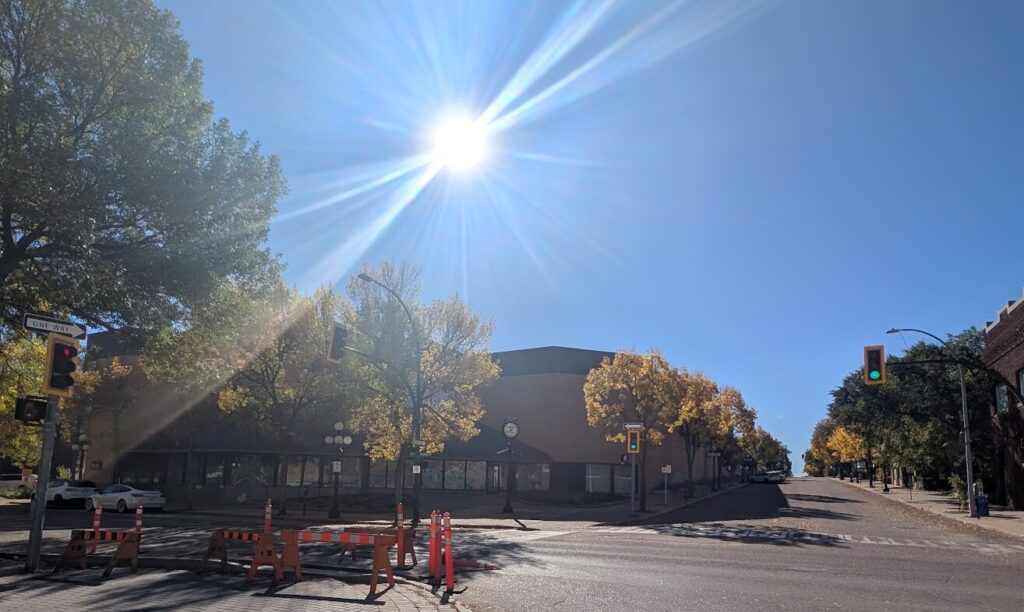
For decades Brandon has watched the once burgeoning commercial core of the city shift. Business has moved away from downtown in favour of stops along 18th Street or elsewhere in the community. As a result, we’ve watched the commercial activity that once supported downtown pick up stakes and move elsewhere. Unfortunately, that move, for the most part, is permanent. We aren’t going to bring back the department stores of 1970’s (think Eaton’s and the Bay), and in a time when entities like banks have moved away from large-scale bricks and mortar operations to pocket spaces, we will be unlikely to see their return as well.
We need to focus now on building the downtown of 2037 and beyond. Why 2037, you might ask. I chose it arbitrarily as a nice round number, ten years out from the first full year of the next council’s mandate.
Brandon’s donwtown should be a dense, mixed-use neighbourhood with thousands of people living within walking distance of restaurants, shops, entertainment and services. It has been widely shared that Brandon could reach 80,000 residents by 2040, and development in the core district should fully support that lofty but attainable goal.
So how do I see this happening? For a long while I’ve been thinking of what I see as a Downtown Critical Mass Strategy, or what I have dubbed People Create Places. A strategy that gets enough people living, working, studying, shopping and spending time downtown to promote businesses once again having a built-in customer base here. It is time to be bold downtown, bold enough on a strategy that future councils could adopt. A strategy that sees 2,000 new residents downtown by 2037, or at minimum 200 new residents in the core area per year for the next ten years. Could we support more and should we advocate as such? Absolutely, but let’s have 200 as our base number.
So what does it look like?
Some proposed deliverables of the People Create Places strategy (note: these are my own thoughts, and not a council endorsed strategy or directive):
- 2,000 new residents downtown by 2037
- Large scale housing strategic alignment
- Tax incentivized property development
- 50 new or expanded businesses downtown by 2037
- Focus on crime prevention and intervention strategies to support a safer downtown
- Focus on direct core development
- Don’t try to recreate retail/commercial spaces as anchors
- Establish the Cultural Hub model
- Create a critical mass fund
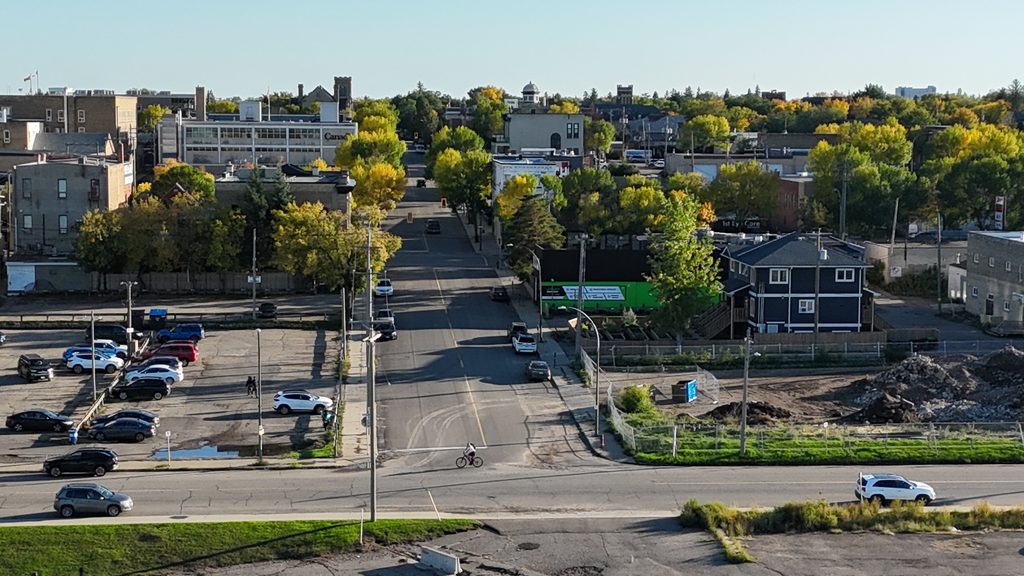
So how do we get there? First, we cannot approach downtown development as a suburban retail vs. downtown density discussion. We must approach the downtown as urban growth brings retail opportunities, and if it doesn’t directly bring those opportunities, we find ways (such as public transit) to safely connect residents with retail, groceries, medical clinics, amenities. For a community of Brandon’s size, we are still small enough to have the “best of both worlds” in that sense. Walk-ability, and portability of opportunities for residents should be our friend and not our enemy.
The proposal:
- We need to create an environment where growth of approximately 120 units downtown per year can occur, resulting in a long-term goal of 2,000 new residents downtown by 2037, three years ahead of that aforementioned 80,000 by 2040 goal. Through critical mass, downtown will find opportunity for retail and service to follow suit, supporting the school of thought that business will flow where the people are. Further, I would like this to be a mix of student, young professional, family, seniors, affordable and market-rate housing. Having ownership opportunities available as well really would add to this goal. I know this does require more detailed market analysis, but I put it here as a “what if” scenario. What if we could grow our downtown housing stock by 120 units a year? What would that look like, and how could we achieve it? I would welcome that work.
- Focus on supporting all forms of housing projects, from 4-25 units or more. Making this appealing for developers makes this appealing for urban growth. Having incentives target larger scale growth means you have a better opportunity to reach your population targets.
- Incentivizing people first strategies makes sense. By putting in place a regulatory environment that supports urban population growth, you effectively target business by proxy of business going where the people are. Having a community focusing on recruiting amenities (which does already occur), would be a real bonus as well.
- Target 50 new businesses established downtown through 2037, or 5 new businesses per year for 10-years. It is attainable, and through partnerships like those the city has with the Downtown Biz and the Brandon Downtown Development Corp., we are well on our way to this number of new starts and more.
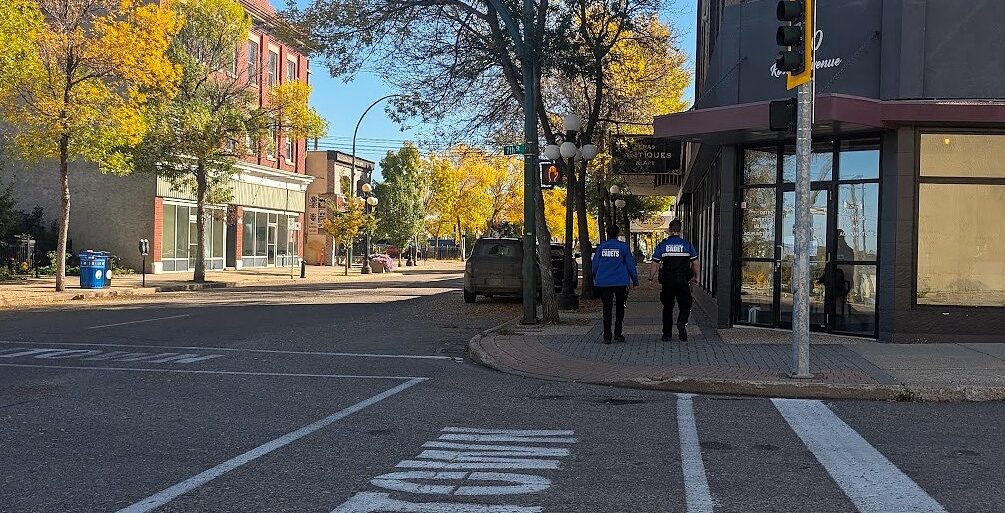
- Crime. This is the big one. Crime is the single biggest challenge to downtown growth. The use of cadets downtown has helped with some of the crime challenges, but more needs to be done. As a former Chief of Brandon’s Police Service once shared with me, we are not going to arrest our way out of the problem. We need more strategies that get to the root of crime, and not the result. Working with the province to build programming that supports people in crisis early is paramount. This comes with supports for 24/7 care, drop-in spaces that are available year-round, and a recovery path forward for those experiencing the challenges that substance users face. If we could even see a 20-30% reduction in violent crime, property crime, and emergency calls, alongside housing target outcomes over that 10-year time frame, it would come with some level of success.
- Back when I was with Renaissance Brandon, at the time I had advocated for the boundaries of the “Renaissance District” to be narrowed to a six block stretch from 12th Street to 6th Street, Pacific to Princess Ave. I still feel that would serve our needs best. Oftentimes, real change comes one corner, and one block at a time, and if we narrow the size, then we have the ability to more focus the resources in the first phase to the “core of the apple” and then work outwards from there. I’m not saying that there hasn’t been good projects that exist on the fringes of downtown, I just see the most impact we can have being central to that 18 block square grid for the foreseeable future.
- Trying to recreate our downtown as a place central to retail development unfortunately is old thinking. For our downtown to be successful, we need spaces where people live, that trigger retail, grocery, clinics etc., to follow. With Brandon’s proximity, it has become increasingly difficult to hone in on a single neighbourhood and the walk-ability aspects of that neighbourhood. With good public transit (of which routing is being worked on currently), and access to vehicles, people are mobile and will for the most part travel to their destination for the needs they have, but having people downtown should inherently add value to a retail or commercial entity setting up shop there.
- I’ve long been a strong proponent for the establishment of a cultural hub. A safe space where our three city organizations of cultural and historical significance in the downtown (Western Manitoba Regional Library, Art Gallery of Southwestern Manitoba, Brandon General Museum and Archives) come together to form a cultural hub. As a council, we supported that model when we as a city applied for federal funding to try and get a building revitalization off the ground. Unfortunately, at that time, we were not successful. I do not want this idea to die though. There is immense merit in creating this cultural space, and although not a “silver bullet” for downtown revitalization, it would serve as a catalyst for change in our downtown. We should continue to support it at every juncture.
- Establishing the critical mass fund I think is integral to the future of downtown development. Champion downtown housing incentives, alongside a discussion through provincial partners to lobby for a $5 million commitment from them to downtown development, matched by the city through a debenture to create a $10 million dollar downtown endowment fund. If it paid out roughly 5% (conservatively) per year on investments, we would be looking at $500,000 per year in dividends to be spent downtown, while never touching the principal investment. Any municipal contribution would require future council discussion and could be phased in over a number of years through a combination of grants, partnerships, reserves, or dedicated growth revenues, but it gives us a reason to be optimistic.
The 10-Year Action Plan
Year 1-3:
- Establish the downtown critical mass fund
- Secure provincial participation
- Update incentive policies
- Residential growth
Year 4-7:
- Further residential growth
- Launch cultural hub project
- Implement enhanced safety initiatives
Year 8-10 (and beyond):
- Complete final housing targets
- Recruit major resident-serving amenities such as health, grocery, childcare, recreational and commercial services.
- Expand successful programs
Downtown Brandon will never be exactly what it was fifty years ago, nor should it be. Our opportunity is not to recreate the downtown of the past, but to build the downtown of the future. If we can create a neighbourhood where people choose to live, work, learn and invest, the businesses, amenities and opportunities will follow. That is the conversation I believe Brandon should be having as we look toward 2037 and beyond. Wouldn’t this be an excellent legacy to celebrate our 150th birthday (in 2032)? I sure think so.
I look forward to being a part of that discussion should I be given the mandate to again serve. I welcome your thoughts!
Cheers,
Shaun