
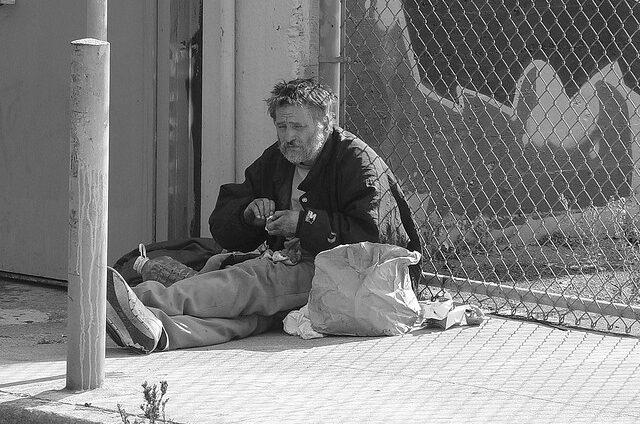
For years, discussions about homelessness have centred on a familiar question: how do we manage a growing problem?
Perhaps it’s time to ask a different one: how do we solve it?
More than a decade ago, I wrote in my weekly Brandon Sun column about Medicine Hat’s ambitious commitment to effectively end homelessness by ensuring no one remained in a shelter for more than 10 days before being connected to stable housing and supports. At the time, it seemed like an extraordinary goal. Yet it was built on a simple belief that homelessness is not an inevitable condition. It is a challenge that can be addressed through coordinated action, housing-first policies and community commitment. Now a decade on, it hasn’t been perfect, but it has helped in the Medicine Hat example.
That same conversation now is taking place on a much larger scale in Winnipeg.
The federal government recently announced more than $1 billion in funding to build 2,000 supportive and transitional housing units in the capital region, and establish a new Centre for Mental Health and Addictions, all aimed at breaking the cycle of homelessness. Political leaders have described the investment as a “once-in-a-generation opportunity”, while homelessness advocates have spoken openly about renewed optimism that chronic homelessness can be significantly reduced or even eliminated.
What stands out is not only the size of the investment. It is the growing consensus around it.
In a recent interview with the Winnipeg Free Press, national homelessness advocate Tim Richter argued that meaningful progress becomes possible when different levels of government, community organizations and public institutions align behind a common goal. The funding itself matters, but so does the political environment that allows bold action to occur. When governments stop debating whether homelessness should be addressed and instead focus on how to address it, opportunities emerge that previously seemed impossible.
That lesson has important implications for Brandon.
Too often, homelessness is viewed solely through the lens of emergency response. Communities focus on shelter capacity, food security and crisis intervention. Those services are essential and organizations such as Samaritan House continue to perform remarkable work supporting vulnerable residents every day.
But shelters are not solutions. They are downstream of the problems facing the river. Focus needs to continually shift to the headwaters (addictions treatment, isolation, crime, and mental health supports), because shelters are necessary, but are a responses to people already in crisis.
The common thread connecting successful homelessness strategies across North America is an understanding that housing must be paired with early intervention and sustained supports. It is not just an argument of whether funding is in place for homelessness initiatives. Mental health services, addictions treatment, employment assistance and community outreach all play a role in helping people achieve housing stability as the end result. The Winnipeg plan recognizes this reality by linking housing investments directly to mental health and addictions supports. Evidence from similar supportive housing projects across North America have also demonstrated that early intervention initiatives lead to substantial reductions in emergency room visits and hospital stays, lower crime and justice recidivism, and creating opportunities in communities that create holistic benefits.
Brandon already possesses many of the building blocks needed for progress. The city has experienced service providers, engaged community organizations and strong collaborative relationships across municipal, provincial and federal governments. What has often been missing though is a clearly articulated community-wide target that says we will reduce homelessness by X number by X date.
Imagine if Brandon adopted a tangible and measurable goal similar to those seen elsewhere: ending what is deemed chronic homelessness within a defined period of time.
Not reducing it.
Not managing it.
Ending it.
Such a target would force conversations around enhanced data collection (which to an extent already is happening at the base level), housing supply, wraparound supports early and accountability from the end user. More importantly, it would create a shared objective capable of bringing organizations together rather than leaving them to tackle individual pieces of the problem independently.
Critics will argue that homelessness can never be completely eliminated because new people continually fall into crisis. Technically, they may be correct. But communities like Medicine Hat demonstrated that homelessness can be made rare, brief and non-recurring. That is a far more ambitious vision than simply accepting growing encampments, increasing shelter demand and rising social costs as a permanent reality.
The greatest lesson emerging from the conversation in Winnipeg is that homelessness is not merely a housing issue. The Province’s ‘Your Way Home’ initiative is bold and I commend them for that as it does have elements of that aforementioned holistic approach. This is not just a leadership issue. It is a mental health issue. And probably most importantly to note, it is the byproduct in almost all instances an addictions issue, with the provincial program recognizing that. It requires governments willing to invest, organizations willing to collaborate and communities willing to believe that the problem is solvable. The stars seemed to have aligned there, and the proof will be in that aforementioned data driven analysis and hard outcomes.
The question facing Brandon is not whether we can afford to pursue that vision? It is whether we can afford not to.
If the political will exists to make ending homelessness a priority in Winnipeg and across communities throughout our great country, and if cities comparable to Brandon have demonstrated success through coordinated holistic approaches, then the possibility is no longer theoretical. The road map exists.
Reducing homelessness in Manitoba was a target of the previous council, and is an initiative I hope carries forward when we meet to renew our strategic goals this term. My goal though would also be to see us use the Point In Time Counts (PIT) at a given date, and continue to measure those PIT counts each year of our term to see if the numbers are reducing, growing, or maintaining, and adjust our advocacy work, strategy, and planning based on that. We should really drive to see a reduced count when residents again go to the polls in 2030.
Homelessness and the issues that come with it are not an inevitable outcome. The opportunity to change exists. What remains is if the political will is there to follow through.
I welcome your thoughts.
Shaun
(image- Creative Commons, Flickr)